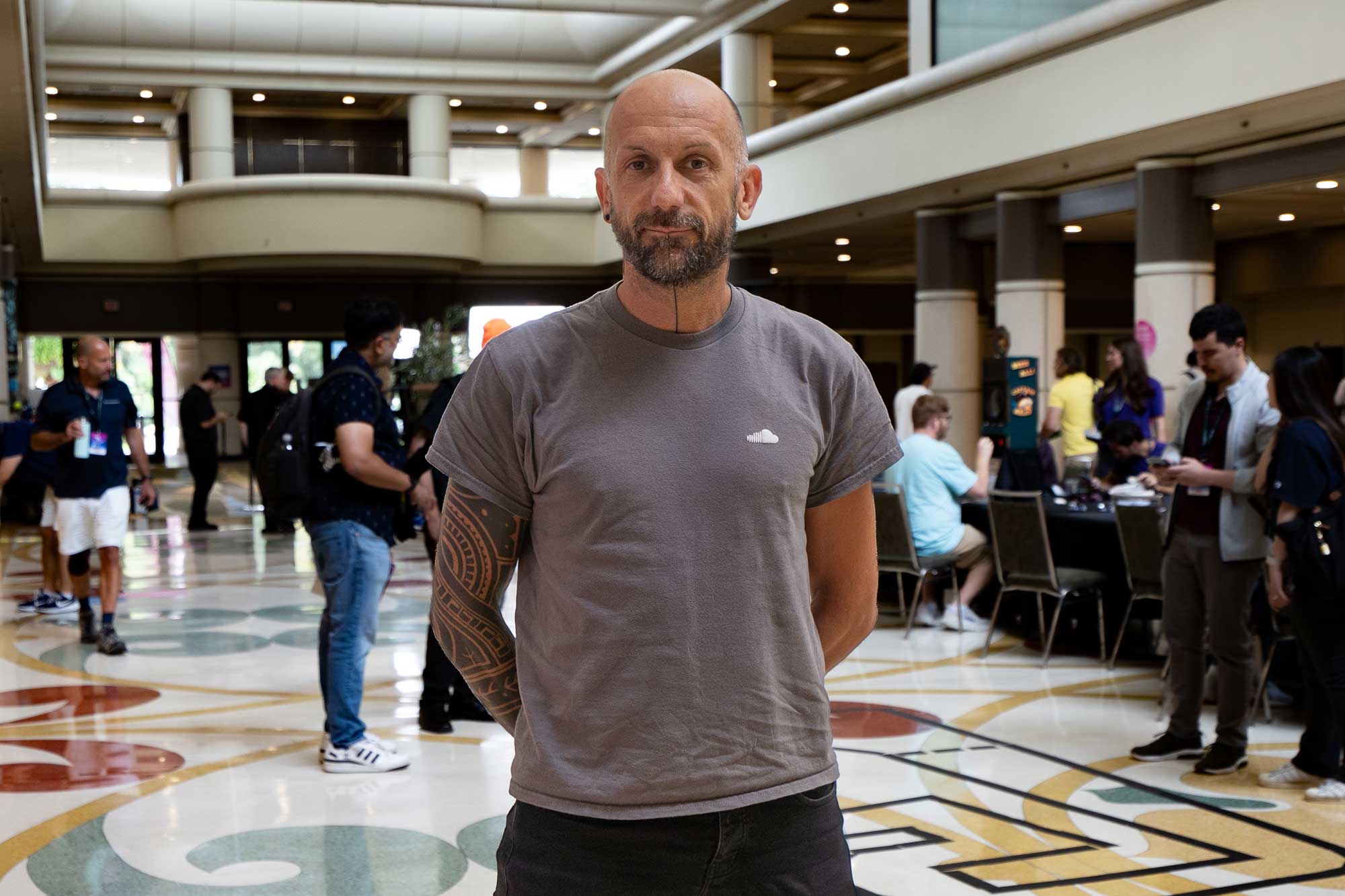
For nearly three decades, Danny Preussler has watched software development reinvent itself.
He began writing software professionally in the late 90s, developing applications in C++ before Java became one of the industry’s defining languages. He later built enterprise applications for BlackBerry, helped lead Android development at eBay, Groupon and Viacom, and today serves as a Full Stack Engineer focused on integrations at SoundCloud. Along the way, he has spent more than 15 years speaking at developer conferences around the world as a Google Developer Expert for Android.
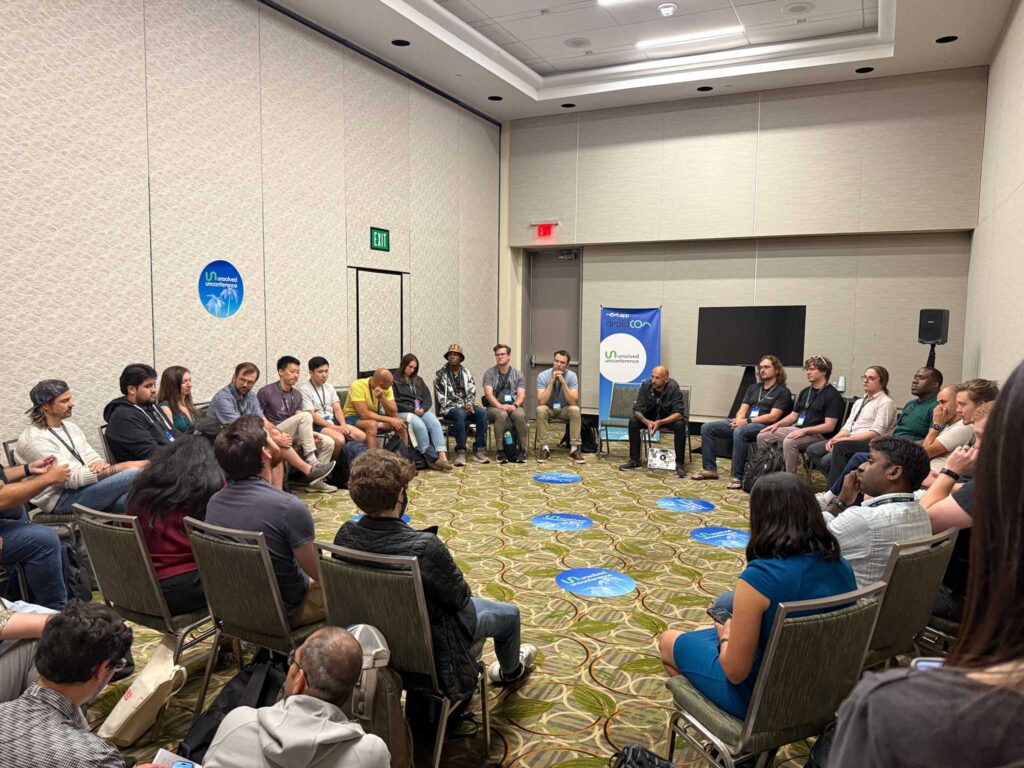
So when Preussler held a roundtable at Droidcon in Orlando to discuss whether “the mobile developer is dead,” it was no surprise the room was packed.
Technology has always changed and the future favors those who are willing to change with it.
While AI may have been the cause of our conversation, we focused our attention more on what it means to build a career in software development as the industry enters another major transition.
Here are four ways Preussler believes the developer role is evolving.
1. Developers will solve more problems and write less code
Developers are already using tools like Claude, Cursor and Codex every day to write code, so the question now is what should developers be doing instead.
“I think it was from Uncle Bob,” Preussler said, recalling a quote he used during his presentation. “‘It’s over. You’re not going to be the one that’s writing the code anymore.'”
Rather than resisting that reality, he believes developers should embrace it.
The job is shifting away from typing every line of code and toward understanding systems, identifying edge cases, reviewing AI-generated solutions and making better architectural decisions.
“The question is how we define the developer role and what our role will be in the future,” he said.
2. Adaptability is becoming more valuable than specialization
Preussler’s career mirrors the evolution of the industry.
Over the years, he has worked across Java, BlackBerry, Android, Kotlin, full-stack development and now AI integrations. That perspective has convinced him that narrowly defined roles are beginning to disappear.
For years, software teams were divided into specialists: Android developers, iOS developers, backend engineers and frontend engineers. AI is beginning to blur those lines.
“I think if you want to be on the safe side, try to be a bit full stack,” he said. “The classic T-shaped engineer.”
That doesn’t mean becoming an expert in everything. It means developing deep expertise in one area while building enough knowledge across adjacent technologies to move comfortably between them.
“The knowledge is still useful,” he said. “These tools allow it.”
3. Experience still matters, but developers have to keep learning
One of the most interesting discussions during Preussler’s roundtable centered around what one attendee described as “comprehension debt.”
As AI handles more of the implementation, developers risk becoming detached from the code they’re responsible for maintaining.
Preussler acknowledged the concern.
“If you constantly ship things, but you’re not attached to the code anymore… you don’t learn anything anymore,” he said.
During our conversation, we discussed one attendee who intentionally challenged AI-generated code. Rather than treating AI like an answer machine, he treated it like a practice partner by asking questions, testing assumptions and experimenting with alternatives.
Preussler immediately connected with the idea.
“I love this idea,” he said. “I immediately mentioned it yesterday to my team.”
For him, the future is about staying mentally engaged with the work instead of outsourcing your understanding along with your code.
4. Smaller teams may build better software
Historically, software organizations often grew because every specialty required its own dedicated experts. AI is beginning to remove many of those barriers, allowing engineers to contribute across a broader range of technologies.
The result, he believes, could be smaller, more collaborative teams capable of moving faster than ever before.
“A smaller team was always by definition more efficient than a larger team,” he said. “Now we have the tools to be able to do that.”
Rather than waiting on separate teams for backend, frontend or platform-specific work, developers can increasingly solve problems together.
“I think it’s a good thing that’s happening in the industry,” he said. “Hopefully there will be a lot of these smaller teams.”
The future belongs to developers who adapt
Preussler has already lived through the transition from enterprise Java applications to BlackBerry, from BlackBerry to Android, from mobile specialization to full-stack development, and now from traditional software engineering to AI assisted development.
Each shift rewarded the developers willing to learn something new.
His advice to younger engineers entering the field today is remarkably optimistic.
“They can outrun the senior developer,” he said of developers who embrace AI early. “Don’t think. Just jump.”
Watch the Full Interview Below
Left to right, Dave Vanz with Developers.Net and Danny Preussler with SoundCloud