
AI models are becoming increasingly capable, but their ability to deliver meaningful results depends on the information they can access, how well they understand that information and whether it arrives in time to make a difference.
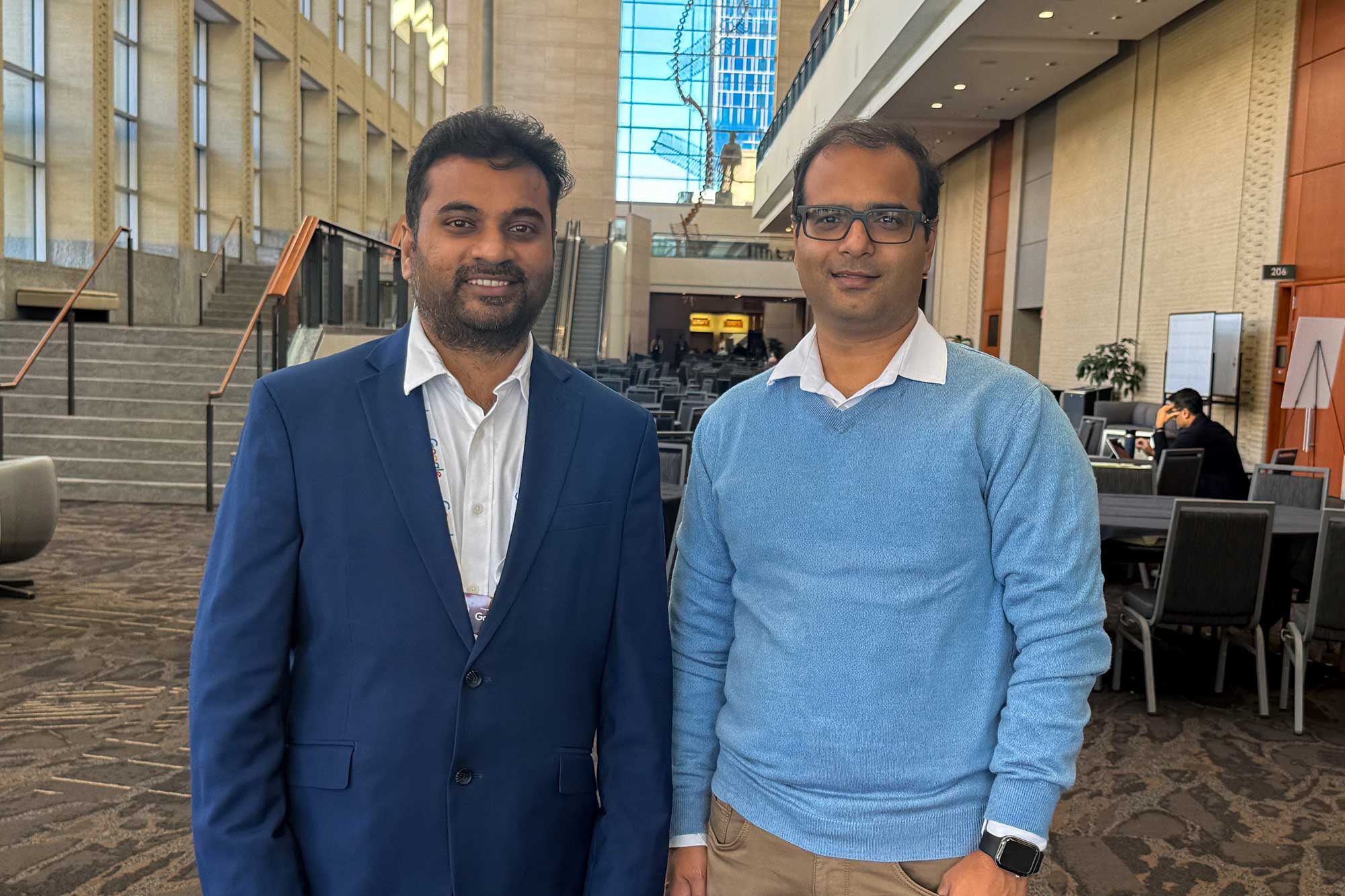
Developers.Net spoke with Abhilash Nagilla and Uday Satapathy, Senior Specialist Solutions Architects at Databricks, about the challenges they encounter while helping organizations develop and implement data and AI solutions..
Both have spent years working with enterprise technology. Nagilla previously held positions at Amazon Web Services, Informatica and Talend, while Satapathy served as Vice President of Data Engineering and Technology at Publicis Health Media before joining Databricks.
Their experiences offer a perspective on what organizations need to consider as they integrate AI into their operations.
Why AI Needs to Understand Your Business
One of the challenges Nagilla encounters is helping organizations make their data useful while maintaining the security and accuracy of the information being accessed.
“One of the fundamental problems that I see in today’s world is, you know, how you can make your data work in a correct fashion, in a secure fashion,” Nagilla told Developers.Net.
He believes an important piece of that challenge is context.
Organizations may have enormous amounts of data spread across different systems, but giving an AI model access to that information doesn’t necessarily mean it understands how the information relates to the business.
Consider an AI agent responsible for helping a company manage inventory. Access to inventory records might tell the agent how many products are available, but making useful recommendations could also require understanding supplier relationships, customer demand and operational constraints.
Without that context, the agent may have access to accurate information while still producing recommendations that fail to account for how the business operates.
Satapathy explained that the limitations of general-purpose AI models become more apparent when they’re asked to solve problems specific to an organization.
“These models are really good at many of the things. You know, they’re generalists. But very often they’re not good at a very narrow set of problems which exist in the perimeter of an organization’s security boundaries,” he said.
For that reason, he believes organizations need to consider how AI systems access and interpret their internal information.
“So these AI agents or AI models need access to the organization’s data so that they can give grounded answers, right? Not give a general answer.”
Building Context Into AI Infrastructure
One approach the architects discussed involves developing what is known as an ontology, a framework that helps systems understand the relationships and meaning behind organizational data.
For example, a company’s customer records, transactions and operational information might exist in separate systems. An ontology can help an AI application understand how those pieces of information relate to one another.
Nagilla explained that Databricks is investing in developing this context layer so organizations can build AI applications around information they trust.
The goal is to give AI agents a better understanding of the data they’re working with while maintaining appropriate security controls.
For CTOs and engineering leaders, this introduces an important consideration when planning AI initiatives.
Before determining which model to deploy, organizations may need to evaluate whether their existing data infrastructure can provide the information and context required for the application to perform its intended function.
When Having the Right Data Isn’t Enough
Even when an AI system has access to accurate information and understands its context, another challenge remains.
How quickly can that information reach the people or systems responsible for making decisions?
“In today’s world, real-time decision making could be a difference between a successful and an unsuccessful company,” Satapathy said.
The two architects addressed this challenge during a recent presentation at All Things Open in North Carolina, “Apache Spark Real-Time Mode: How Spark Is Evolving for Low-Latency Streaming.”
Apache Spark is an open-source data processing engine used to handle large volumes of information. Its newer Real-Time Mode is designed to support applications that require data to be processed with lower latency.
The architects described applications ranging from fraud detection to operational monitoring and personalized shopping recommendations.
In each case, the value of the information can depend on how quickly it becomes available.
Satapathy explained that their presentation focused on making data available to decision-makers as soon as possible.
“It’s like an event happens, in milliseconds, it is available with somebody who can do something with it,” he said.
During the interview, the conversation returned to an example from their presentation involving an airline responding to a pilot calling in sick shortly before a scheduled flight.
An unexpected absence can disrupt flight schedules and affect passengers trying to reach their destinations. Systems capable of processing operational information quickly could help an airline identify the disruption and respond sooner.
The example illustrates why speed matters, although not every business application requires information to be processed in milliseconds.
For engineering leaders, determining which operations benefit from real-time processing is an important part of deciding where to invest in infrastructure.
Preparing for Technology That Keeps Changing
The challenges don’t end once an organization has developed an effective data infrastructure.
AI models continue to evolve, creating another responsibility for the engineering teams tasked with maintaining these systems.
“There’s a relearning which all of us need to do, to work with AI, which keeps getting better every week,” Satapathy said.
He explained that Databricks uses automation and internal AI systems to connect tools and infrastructure across the organization.
Nagilla also described how the company uses smart routing to direct requests to different AI models depending on the complexity of the task.
Rather than treating every new model as a reason to rebuild an application, this approach allows systems to select an appropriate model for a particular request.
Keeping the Business Problem at the Center
Despite the technical complexity of their work, both architects repeatedly returned to the importance of understanding what a business is trying to accomplish.
For Nagilla, much of the satisfaction comes from seeing something he helped develop become part of a customer’s operations. He described watching a feature reach production and eventually appear on a customer’s website, knowing he played a role in making it possible.
That connection between engineering and business outcomes also influences how he approaches customer challenges.
“Building a pipeline that moves data from A to B, anyone can do it, but what’s the business value? What’s the business context it brings?” Nagilla said.