As enterprise reliance on cloud ecosystems deepens, the traditional boundaries between development, operations, and cybersecurity are blurring. This shifting landscape was a major focal point at this year’s Salesforce TrailblazerDX (TDX).
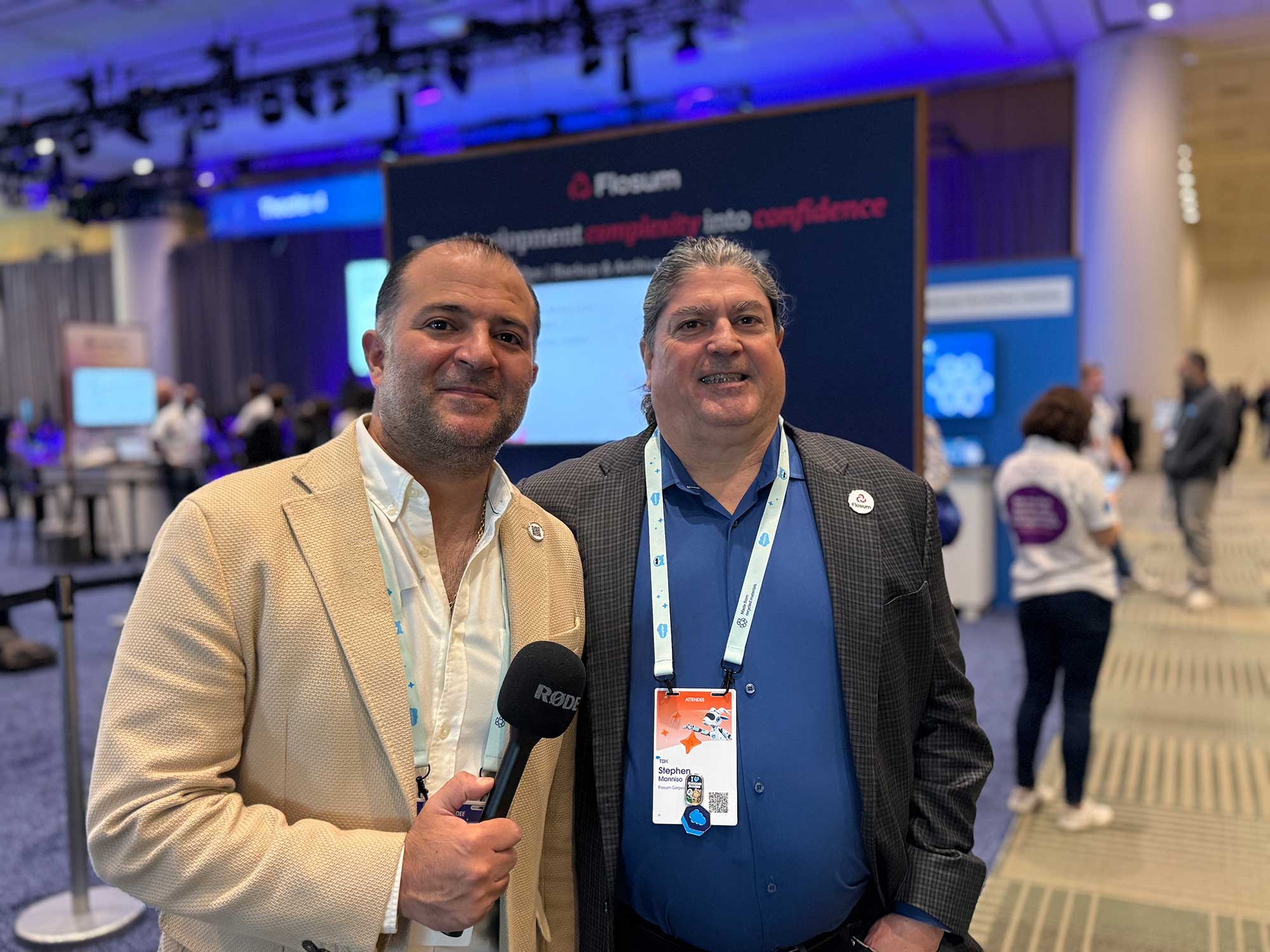
While Salesforce provides an incredibly robust infrastructure, managing large-scale deployments, data migration, and compliance across complex sandbox environments remains a significant challenge for engineering teams. We sat down with Stephen Manniso from Flosum to discuss why specialized, native tooling has become critical for highly regulated industries navigating modern DevOps.
The Architecture Dilemma: Outside-In vs. Inside-Out Security
For IT architectures in finance, healthcare, pharmaceuticals, and the public sector, the standard method of moving metadata and code to third-party clouds for testing or deployment introduces a massive compliance hurdle. Every external hop requires new firewall configurations, security audits, and data governance vetting.
The alternative approach—and one that is gaining significant traction—is utilizing native applications that operate entirely within the existing platform’s guardrails.
“Technically, being native gives an advantage both in speed, time, and in regulated industries, an authority to operate (ATO) very rapidly,” Manniso explained. “When you never see, touch, or bring the metadata of Salesforce elements out into another cloud, you aren’t breaching firewalls or risking exposure by moving data into an external cloud environment.”
By interacting directly with the native Apex engine, embedded tooling automatically adopts all the pre-configured parameters, security protocols, and compliance frameworks of the host organization. For enterprise teams, this significantly compresses the time required to clear security reviews and achieve reusable compliance certifications.
The Value of Platform Specialization
In the broader DevOps landscape, there is a constant tug-of-war between generalized tools (which attempt to span across AWS, Azure, and various SaaS platforms) and hyper-specialized solutions.
While generalized pipelines offer a single pane of glass for multi-cloud organizations, they often struggle with the unique, metadata-driven architecture of Salesforce. Highly specialized tools, by contrast, focus exclusively on the specific nuances of a single ecosystem. This focus allows engineering teams to seamlessly integrate advanced native capabilities—such as Mulesoft extensions, AI agents, and complex sandbox-to-production data migrations—without having to build custom, fragile middleware to handle the translation.
Furthermore, specialization directly impacts the quality of technical engineering support. When a support team only services one environment, resolving complex deployment blockers or pipeline bottlenecks becomes a much faster, more predictable process.
Hyper-Focused on the Salesforce Community
Unlike other DevOps tools that try to be a jack-of-all-trades across multiple clouds, Flosum intentionally restricts its focus.
“The business aspect is we only care for and cater to Salesforce users,” said Stephen. “We don’t spread our DevOps across all the other products out there. Because we are nimble, direct, and focused, we have the greatest report card on customer success and customer support in the industry.”
Every single Flosum delivery is backed by a dedicated customer care team, including a Technical Account Manager (TAM) and a Customer Success Manager, ensuring that clients are never left to navigate complex deployment pipelines alone.
Distributed Global Teams with a Local Touch
Headquartered in San Ramon, California, Flosum operates as a fully remote global entity with a strong footprint in Great Britain and Latin America. However, their physical proximity to Salesforce hubs remains a key strategic asset.
“Everybody is remote, but since we’re so close to Salesforce, we utilize their offices and Carahsoft [our distributor and reseller] a lot. Salesforce invites us in with all of their capability in the Reston, Virginia area,” Stephen shared.
When asked about managing teams and building trust in a post-COVID, remote-first environment, Stephen—an industry veteran—offered a candid perspective.
“I’m old school. I like face-to-face meetings, going to agencies and offices, and grabbing lunch. Especially in the federal government, you have to build trust. But remote work doesn’t slow down our performance and delivery.”
To stay aligned, Flosum leans heavily into the digital workspace, utilizing web meetings, Slack, and, naturally, Salesforce itself. “We eat our own dog food,” Stephen joked. “We build our application on our product within our own Salesforce instance. It all works.”
Looking Ahead
As the Salesforce platform continues to expand with AI and advanced automation, the need for robust, compliant DevOps is higher than ever. By doubling down on its native architecture and relentless customer focus, Flosum is proving that narrow specialization can yield massive enterprise rewards.
For more insights, developer interviews, and IT news, stay tuned to Developers.News.