“In a world obsessed with finding the most intelligent and the most qualified driver, we are more obsessed with finding the most detailed map on which this driver will drive.”
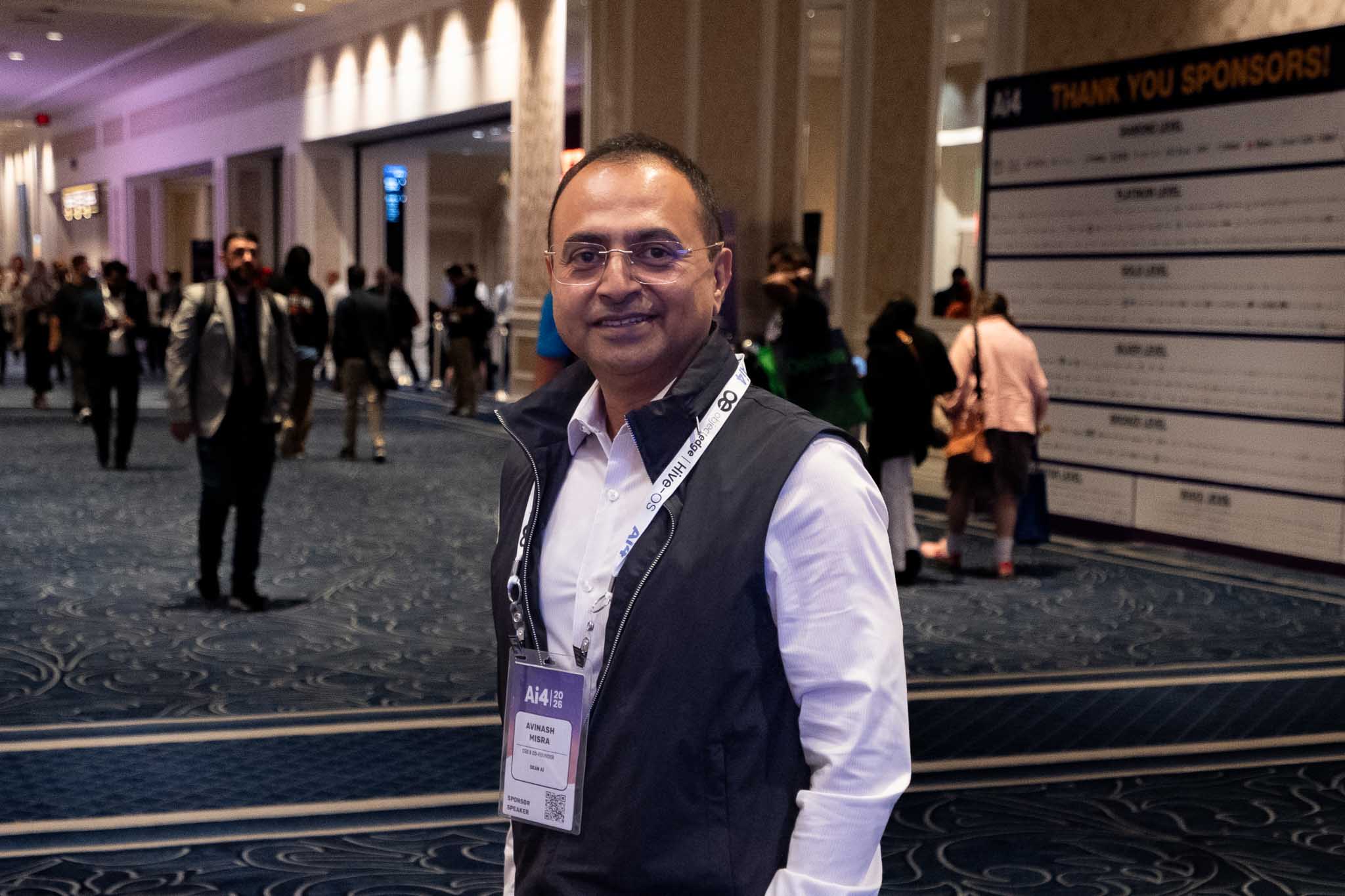
This was a metaphor that Avinash Misra, CEO of Skan AI shared with us when we spoke with him after his speech in Las Vegas at Ai4.
As companies race to find ways to put increasingly powerful artificial intelligence models to work, he believes many are overlooking a more fundamental problem.
The AI may be intelligent enough. It just doesn’t understand how your company works.
“I began to realize that as much attention was being paid to the tooling of transformation, the RPA and the bots and the large language models and the dynamic workflows and so on and so forth, very little attention was paid to modeling work that went on in organizations,” Misra said.
It was an observation that would eventually help lead Misra, who has had previous experience working with large scale business process transformation, to co-found Skan AI in 2019.
Today, the emergence of AI agents has made the problem he identified years ago even more consequential.
“The AI can take care of the tooling,” Misra said. “It can do it. It has the intelligence.”
What it doesn’t inherently possess is the context surrounding the work.
What We Say We Do vs. What We Actually Do
Understanding how work happens inside an organization sounds relatively straightforward. Ask employees what they do, document the steps and give those instructions to an AI system.
Misra argues that this doesn’t provide the complete picture.
“Polanyi’s paradox: Humans know more than they can tell,” he told Developers.Net.
An employee might perform 10 small tasks throughout the day that each consume a minute without thinking much about them. Meanwhile, one frustrating task that takes five minutes may stand out as the obvious inefficiency.
The employee remembers the 5 minute problem. The organization misses the 10 minutes hiding throughout the rest of the process.
There is another complication.
“As much as we know about our work, we only describe our work in terms of what we are supposed to do, not what we actually do,” Misra said.
Those undocumented actions can matter.
An employee processing an invoice might leave one application, answer a question in Slack, retrieve information from another system, answer an email from a spouse, and then return to the invoice.
Those seemingly minor actions collectively contain knowledge about how the business operates, including decisions, exceptions and interactions that may never appear in an official workflow.
Misra believes understanding that reality requires observing work as it happens rather than relying exclusively on how people describe it.
That idea became central to Skan AI.
The company’s technology observes work across employees’ screens and uses AI models to identify the applications, steps, decisions and movement of context involved in a business process.
Misra described what the technology is attempting to understand as, work is language.
“We treat work as language, just that in this language there are no words, sentences, paragraphs,” Misra said. “There are steps, substeps, applications, features that are involved in this business process.”
AI Has Made Context More Important
Misra’s argument comes at an interesting point in the evolution of enterprise AI.
Much of the industry’s attention has centered on increasingly capable models and the growing ability of AI agents to perform tasks on behalf of humans. But as those capabilities improve, Misra believes the challenge is shifting.
During his Ai4 appearance, Misra described frontier AI models as “brilliant but blind.”
They may possess extraordinary general intelligence about language, coding and countless other subjects, but they don’t automatically possess the institutional knowledge that exists inside a particular organization.
That includes knowing how work actually moves between employees, why an experienced worker makes one decision instead of another, which exceptions matter and where the official process differs from reality.
Misra’s previous experience with enterprise mobility and process transformation helped shape that perspective. Before Skan AI, he co-founded Endeavour Software Technologies, an enterprise mobility company later acquired by Genpact. His career has given him a view of several generations of technology intended to change how businesses operate.
With AI, however, understanding the work itself takes on new importance.
“The context of work has become vitally important to the success of operationalizing AI in the enterprise,” Misra said.
That distinction could become increasingly important as organizations move beyond giving employees AI assistants and begin allowing autonomous agents to perform actual business processes.
Knowing how to execute the task is only the beginning.
When AI Starts Doing the Work
Misra sees another challenge waiting on the other side of successful AI adoption.
Once an AI agent understands a process well enough to perform it, an organization must decide what that agent is actually allowed to do.
“When the AI agent starts doing these things, then how do you make sure that you have governance and controls over those actions?” Misra said.
An agent may understand the next logical step in a process, but that doesn’t necessarily mean company policy, a contract or regulatory requirements permit it to take that action.
That creates a need to provide AI with context and to establish boundaries around how that context can be used.
Misra describes it as turning the same “context loop” used to understand work into a “control loop” when humans and AI agents begin working together.
It’s a problem that becomes more important as AI moves from recommending actions to taking them.